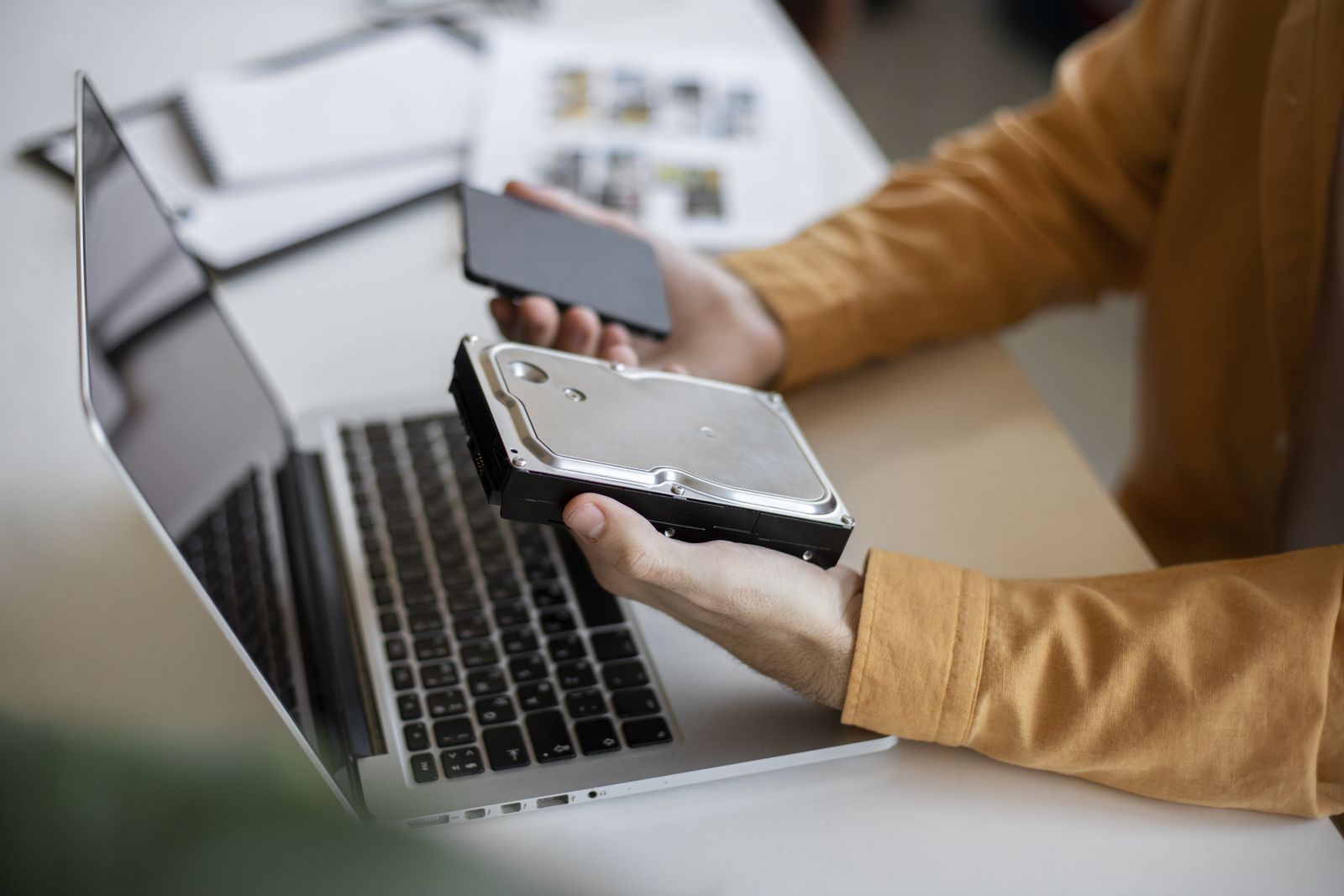
Not everything is lost when a server, NAS or desktop stops working: it’s often still possible to recover the data that matters. I take on complex recovery projects for Linux-based servers and storage, including the network storage appliances many small businesses and homes rely on.
First, stop writing to the affected disks. Don’t run repair tools, reinitialise the array or “try one more thing” until the situation is understood. Every write can overwrite data that is still recoverable. Then get in touch.
NAS and storage appliances
Many small-business and home NAS units (Synology, QNAP and similar) run Linux and software RAID under the hood. Even when the appliance itself has died, it’s often possible to reconstruct the disks on a different system and get to your data.

Failed and degraded RAID arrays
I’ll look at what your system is reporting and work out the safest steps to bring the array back, or to copy the data off it before anything else fails.
Damaged filesystems
Depending on the type of issue, it’s usually possible to repair a faulty filesystem, or at least recover most of its contents, even after partial data loss.
Photos on old cameras and cards
Old digital cameras, memory cards and USB sticks often still hold photos that can be recovered, even when the card no longer works properly. See also photo archiving and restoration.
Deleted files
It’s not always possible to undelete files. But if you remember what was in them (keywords from an important document, for example), I may still be able to recover some data from an offline copy of the disk.
How it works
- Discovery call. Tell me what happened, what equipment is involved and what you need back.
- Assessment. I’ll examine the disks or system, without changing them, and tell you honestly what’s likely to be recoverable and what it will take.
- Recovery. Only once you’ve agreed the quote do I carry out the recovery, working from copies of your disks wherever possible.
- Prevention. Afterwards I’ll recommend a backup approach so you’re not in the same position again.
Physically damaged drives (clicking, not spinning up, fire or water damage) need a specialist clean-room lab. I’ll tell you if that’s the case, and can coordinate with one.